The demand for medical supplies from China suppliers has surged in recent years. However, this increase comes with challenges, particularly in ensuring product quality. Businesses must learn how to ensure the quality of medical supplies from China suppliers to protect their reputation and the health of end-users.
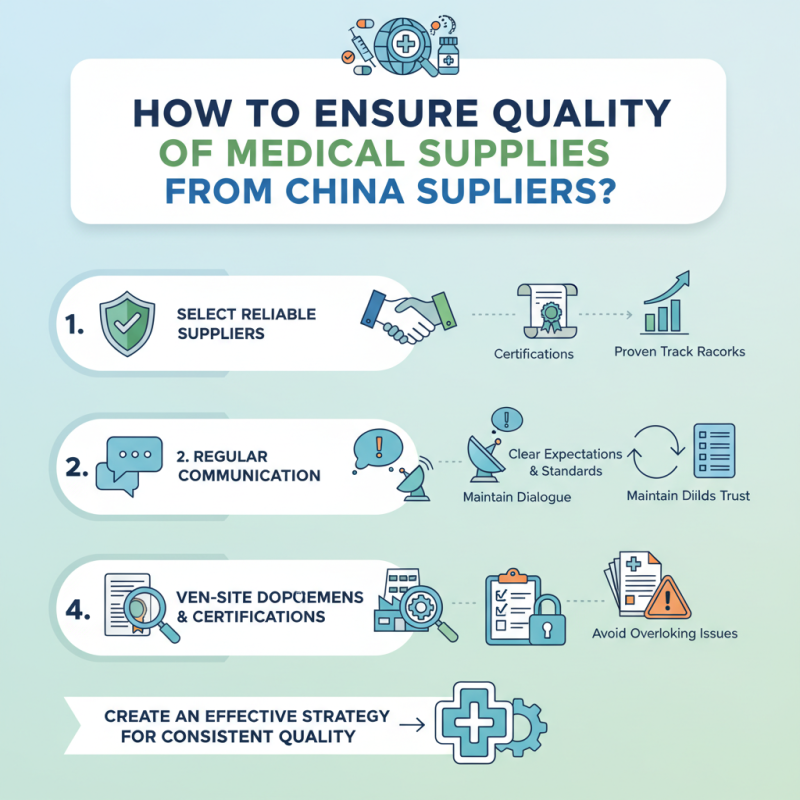
Quality assurance starts with selecting reliable suppliers. Engage in thorough research to find those with strong certifications and proven track records. A supplier’s past performance is a crucial indicator of future reliability. Regular communication is vital. Establish clear expectations and standards upfront, and maintain dialogue throughout the supply process.
Moreover, consider conducting on-site inspections or audits. This adds another layer of assurance and builds trust. Documents and certifications need careful verification as well. Yet, many overlook this step, which can lead to significant issues. By thoughtfully addressing these aspects, companies can create an effective strategy to ensure consistent quality in their medical supplies.
When acquiring medical supplies, quality must not be compromised. High-quality supplies ensure patient safety and adherence to regulations. Poor quality can lead to serious health risks and financial losses. Thus, understanding how to evaluate suppliers is crucial for effective procurement.
Tips: Always request certifications. Verify that suppliers comply with international quality standards. Such documents can provide insight into their manufacturing processes. Conduct on-site audits when possible. This adds credibility to their claims and gives you a better understanding of their operations.
Quality assurance involves continuous oversight. Establish clear communication with suppliers. Discuss quality expectations and performance metrics. Regularly review their compliance with these standards. Be ready to pivot if a supplier fails to meet these requirements. Reflecting on past partnerships is essential for improvement. Not every supplier may work out as expected. Use those experiences to refine your selection process.
Evaluating potential suppliers is crucial for ensuring quality medical supplies from China. Key factors should include
certifications, production capabilities, and
past performance. According to a 2022 report from the World Health Organization, about 30% of medical
supply failures are due to poor quality controls. Clarifying a supplier's
adherence to international standards, like ISO 13485, is essential.
Inspecting manufacturing facilities adds another layer of assurance. In-person visits can reveal operational practices not visible
in reports. A study highlighted that 40% of suppliers lacked necessary quality assurance measures.
This reflects the need for due diligence in selecting partners. Technology, like inspections through drone or AI, is transforming
evaluation processes. However, reliance on technology still requires human oversight to catch issues.
Lastly, understanding communication practices is vital. Effective dialogue can prevent misunderstandings that affect quality. A survey noted
that 60% of suppliers struggle with language barriers. Misinterpretations can lead to critical errors.
Evaluating how suppliers address these matters reveals their commitment to quality and partnership.
Ensuring the quality of medical supplies from China suppliers is crucial for any healthcare provider. Implementing quality control standards during production can significantly enhance the reliability of these supplies. Start by establishing clear expectations with suppliers. Define the materials and processes to be used. Make sure suppliers understand their responsibilities for quality.
Set regular checkpoints throughout the production process. For instance, conduct inspections at various stages, such as material sourcing, assembly, and final packaging. This helps catch issues early and avoids larger problems later. Don't delay taking action if inconsistencies arise. Address them promptly to maintain the desired quality.
Tips: Always review suppliers’ certifications. Ensure they comply with recognized quality management systems. Encourage open communication with your suppliers; a collaborative approach fosters transparency. Also, consider visiting manufacturing facilities if possible. Observing operations can offer invaluable insights into their processes. This builds trust and ensures commitment to high standards.
When sourcing medical supplies from China, conducting thorough product inspections before shipping is essential. A study from the Quality Assurance Institute indicates that up to 30% of medical products can have quality issues. These problems can lead to significant health risks and financial losses. Inspecting products at various stages of manufacturing helps identify defects early.
Implementing a rigorous inspection process is crucial. Inspections should include visual checks, functional testing, and compliance verification with international standards. According to a report by the International Organization for Standardization (ISO), about 20% of shipments fail initial quality tests. This highlights the importance of not just trusting certificates, but actively engaging in quality control. Real-world inspections often reveal discrepancies, from material quality to labeling errors.
It's important not to overlook the human element in inspections. Relying solely on automated systems can miss subtler issues. Communication barriers may also affect inspection outcomes. Companies should ensure that inspectors understand product specifications and quality requirements. A mixed approach combining technology and skilled personnel often yields better results. Quality assurance in medical supplies is not just a box to check; it’s essential for safety and efficacy.
| Product Type | Inspection Stage | Common Issues Found | Resolution Steps | Final Quality Rating |
|---|---|---|---|---|
| Surgical Masks | Pre-shipment | Poor filtration | Re-test filtration effectiveness | A |
| Medical Gloves | In-process | Defective gloves | Remove defective items from production | B+ |
| IV Bags | Final inspection | Leaking bags | Re-check seal integrity | C |
| Syringes | In-process | Incorrect volume markings | Adjust manufacturing settings | A- |
Establishing clear communication and feedback mechanisms with suppliers is crucial in ensuring the quality of medical supplies from China. According to a 2022 report by the World Health Organization, effective communication can reduce misunderstandings and improve product quality by up to 30%. Regular updates and open dialogue create a collaborative environment.
Engaging in frequent feedback sessions can help identify potential issues early. Encourage suppliers to share their production processes and quality control methods. This transparency can build trust. A survey conducted in 2023 revealed that 65% of businesses found that consistent feedback improved supplier accountability. However, not all organizations prioritize feedback. This oversight can lead to significant quality control issues.
Utilizing technology can enhance communication efforts. Platforms such as real-time messaging apps and project management tools allow teams to stay connected. Nonetheless, it is essential to remain vigilant about the effectiveness of these tools. Monitor usage and ensure feedback is actionable. Evaluate how well suppliers respond and adapt based on these interactions.
: It's essential for ensuring quality medical supplies and preventing failures due to poor quality controls.
Verify adherence to international standards like quality management systems to ensure product reliability.
Inspect manufacturing facilities, review past performance, and consider in-person visits to find operational strengths.
Technology, like AI and drones, enhances evaluations, but human oversight remains crucial to identify issues.
Establish regular updates and open dialogues to reduce misunderstandings and foster a collaborative partnership.
They help identify issues early, improve accountability, and enhance the overall quality of medical supplies.
Address inconsistencies promptly to avoid larger problems and maintain desired quality standards.
Observing operations offers insights into supplier practices and builds trust in their commitment to quality.
Language barriers can lead to misinterpretations and critical errors, affecting product quality.
No, some overlook this, which can lead to significant quality control issues that could be avoided.
Ensuring the quality of medical supplies from China suppliers is crucial for healthcare professionals and organizations. To achieve this, it is essential to understand the significance of quality in medical supply acquisition, as subpar products can have serious implications for patient care. Potential suppliers should be evaluated based on key factors such as their manufacturing capabilities, compliance with international standards, and previous performance records.
Moreover, implementing stringent quality control standards during production and conducting thorough product inspections before shipping are vital steps in the process. These measures help to identify any defects or issues early, ensuring that the final products meet required specifications. Additionally, establishing clear communication and feedback mechanisms with suppliers fosters a collaborative relationship that enhances accountability and encourages ongoing improvements. By following these practices, stakeholders can effectively learn how to ensure the quality of medical supplies from China suppliers, safeguarding the health and safety of users.

NW Medical